
"A trio of Indians of the Caughnawaga tribe with decorated paddles bows and arrows"
Creator: John Boyd
Creator: John Boyd
Date: 1914
Reference Code: C 7-3, 11272
Archives of Ontario, I0003496


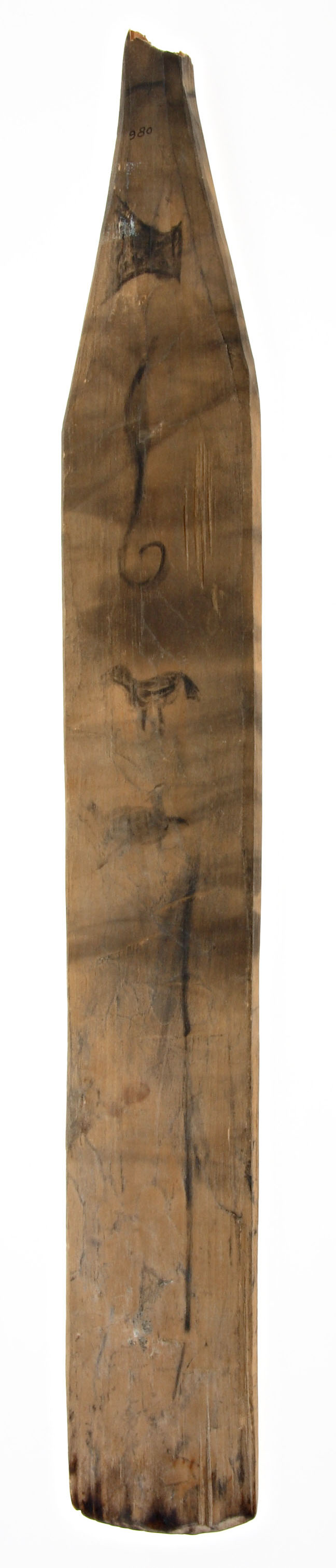
The McCord Museum has updated their online gallery to include a variety of Haudensaunee paddles. Two are from the Lac Tremblant region of Quebec with a decorated paddle blade fragment sourced to the Six Nations Reserve in Southwestern Ontario.



Found two historic photos dated to 1903 which feature some decorated paddles. Take note of the decorative checkerboard pattern on the large paddle on the right side...

Another shot showcases the grip styles of the large steering paddles being used to lash open the door of the cloth teepee.

Some of my work has been featured in the latest issue of Wooden Canoe (Issue #227 - Vol 45 - No3). Rob Stevens wrote an article entitled, "Small Paddles: An Exploration" which features the history of miniature paddles manufactured as samples / souvenirs from various canoe companies, as well as historical artists like Alpheus E. Keech (1855-1926).

Over the pandemic years, I've been using up smaller off-cuts of wood to make scale model historic replicas ranging from 12" to 24" long. Many of these are versions of full-sized paddles already listed on the Gallery page. Most have been decoratively burned but a few have been painted. Also made some little stands from other thin remnants. Here are some of the examples...

I had the privilege of checking out a rare birchbark canoe build taking part in Algonquin Park. The event, taking place on unceded Algonquin Territory, was sponsored in part by Algonquin Outfitters and featured canoe builder Chuck Commanda.
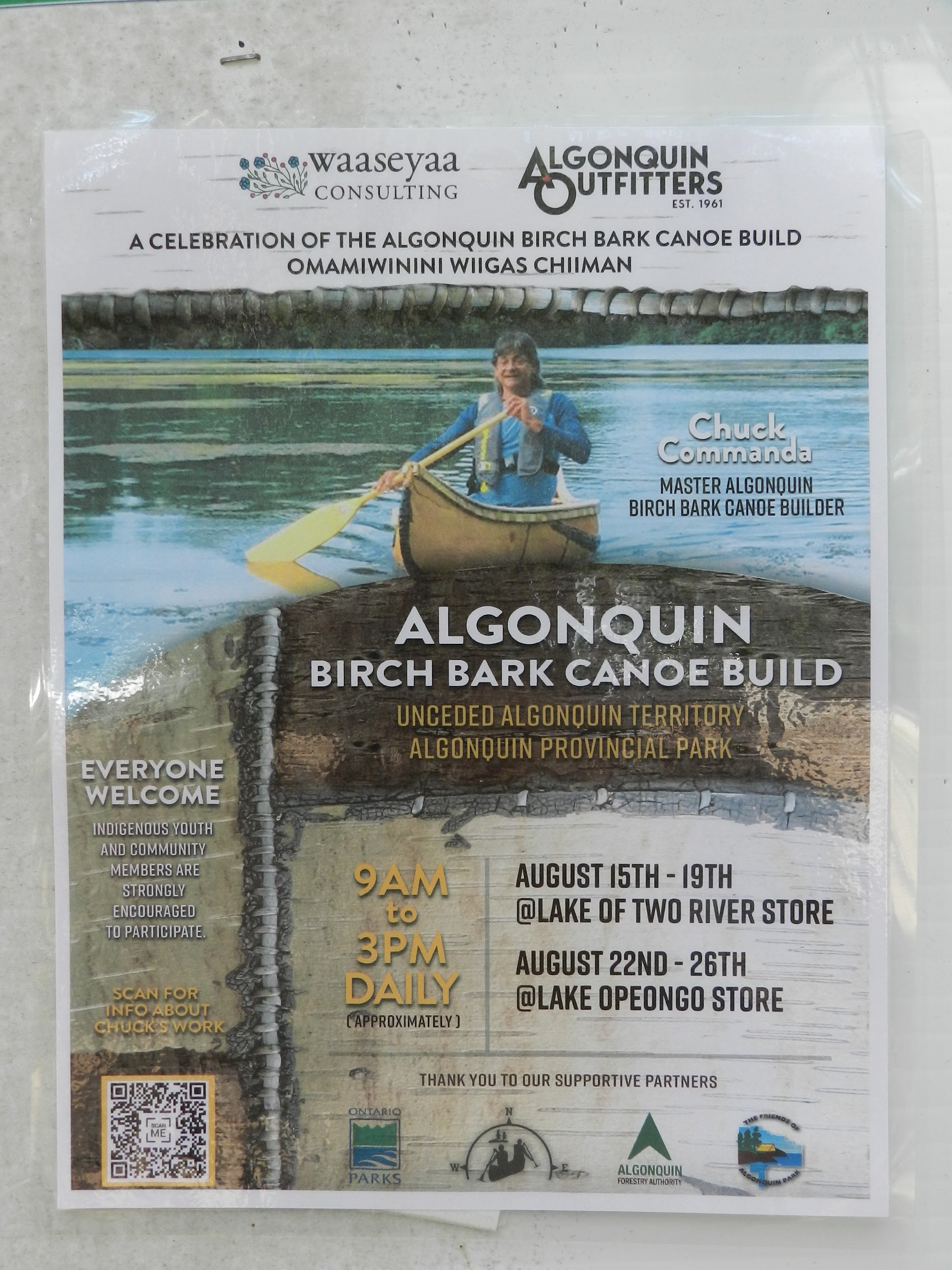
I visited the build site on the 2nd morning of the event. It was taking place under the shaded protection of a canopy at the Lake of Two Rivers store (km 31.4 of the Highway 60 corridor). By then the hull had already been shaped on an elevated building bed, the gunnels lashed on with spruce root amidships and side panels stitched on. Quite a lot of work for just a single day!

Chuck was kind enough to answer some of my questions regarding pre-contact tools and various construction techniques between builders.

The build was for a roughly 14 ft hull using a single length sheet of bark for the hull, except for two small side panels along the sides. The bark was indeed impressive. I inquired about the overall length. Chuck lamented that he had found a super tree and was peeling an impressive 42 foot long sheet. At the last moment however, the part of the bark cracked resulting in this roughly 16 foot sheet and another 26 foot sheet being reserved for another future build.
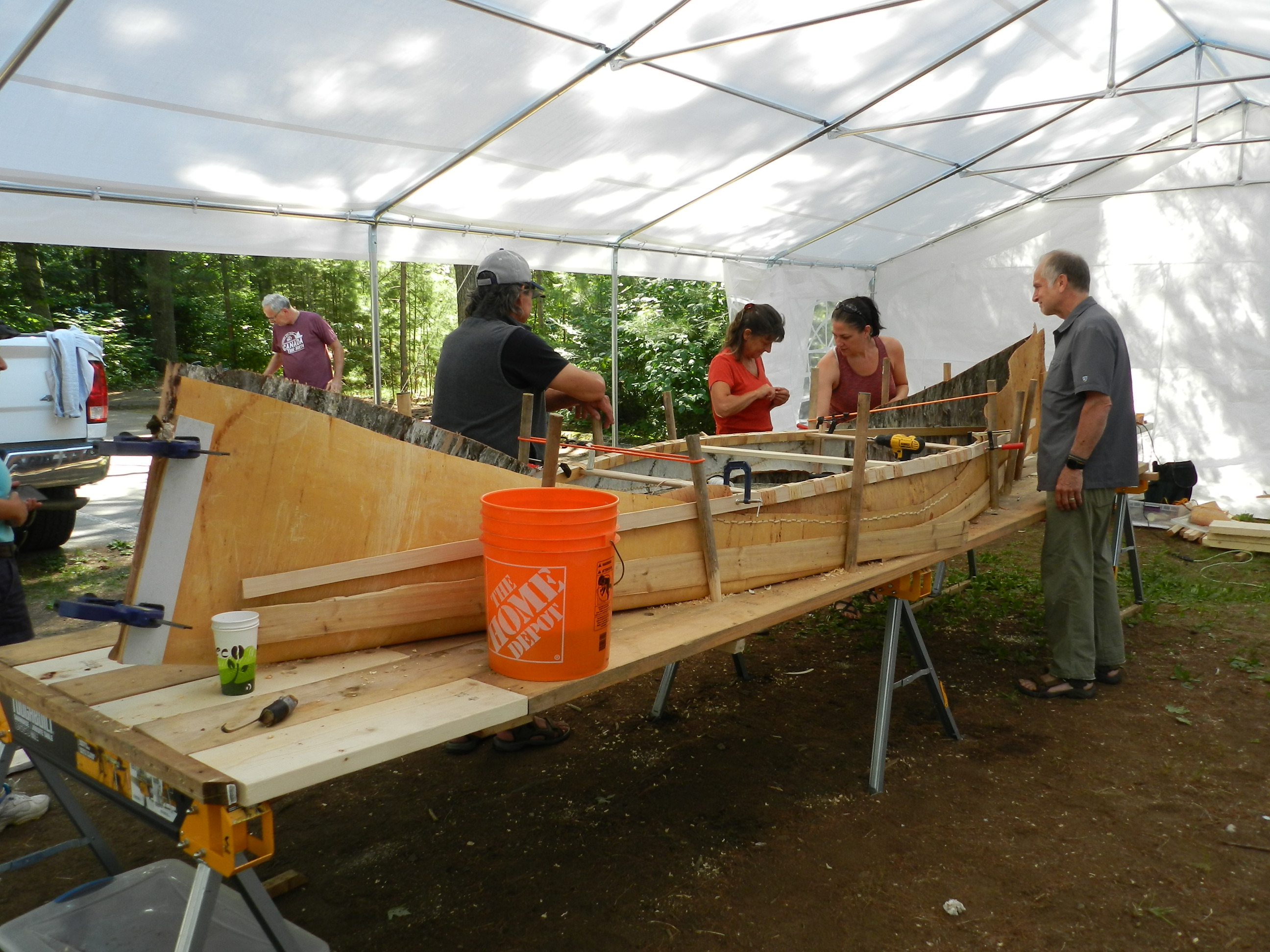
Interestingly, Chuck mentioned that quality white cedar that is straight grained and without branches or knots on the lower section of the tree is getting harder to find than the actual birchbark itself due lumber practices. There was a bunch of split cedar on hand for future parts of the construction which will be taking part at the Opeongo Store near the East Gate of the Park.

Volunteers were on hand to assist with some of the building and the public was encouraged to come in close, take pictures and chat.
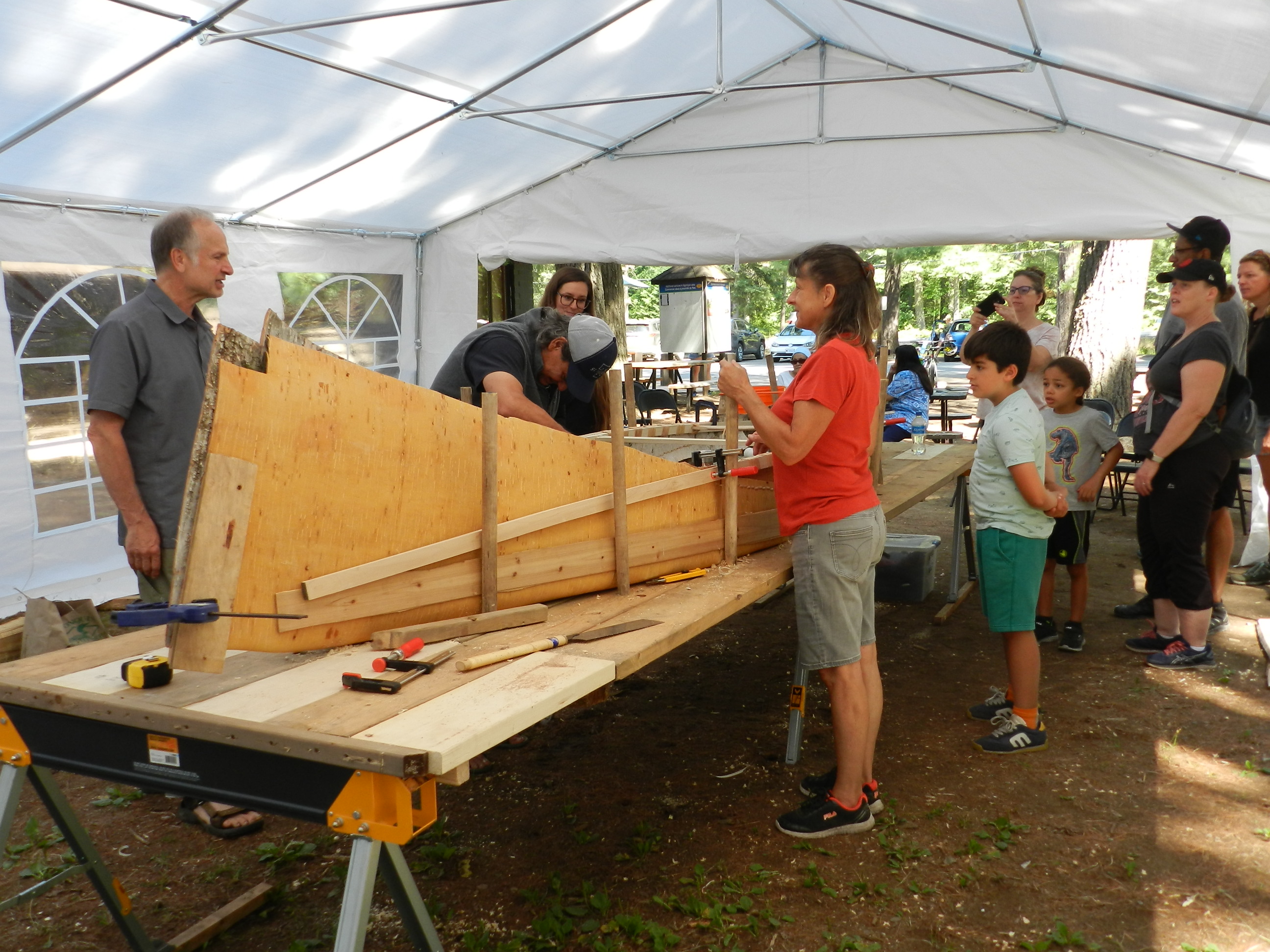
For those of you in the area and wish to visit. Further details are below:






 Email this post
